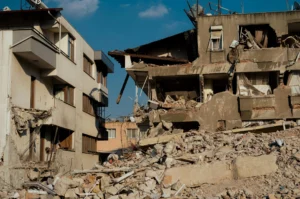

This bulletin summarizes the key provisions of Decree 1171 of August 11, 2026, by which the National Government, exercising the powers granted under Law 1523 of 2012 and following the recommendation of the National Council for Risk Management, declared a disaster situation in response to the 7.4 Mw earthquake that occurred on August 10, 2026.
The following aspects are particularly relevant for legal and financial decision-making:
1. Declaration and Territorial Scope
The primary purpose of Decree 1171 is to activate the special legal framework provided for under Law 1523 of 2012 in order to manage the disaster situation at the national level, given the magnitude of the event and its impact across 12 departments: Antioquia, Cauca, Caldas, Chocó, Quindío, Cundinamarca, Risaralda, Huila, Valle del Cauca, Tolima, Putumayo and Norte de Santander. The disaster situation has been declared for a period of twelve (12) months, which may be extended for an additional period of the same duration, with the aim of addressing the impacts and emergency caused by the earthquake and ensuring the return to normal conditions in the affected territories.
It is important to clarify that this legal mechanism does not constitute a declaration of a State of Economic, Social and Ecological Emergency within the meaning of Article 215 of the Colombian Constitution. Rather, it implements the framework established under Law 1523 of 2012, which sets out Colombia’s national disaster risk management policy and establishes the National Disaster Risk Management System.
Accordingly, the purpose of the Decree is to establish a specific action plan (Plan de Acción Específico – PAE) at the national level to ensure an appropriate response to the effects of the earthquake. The Decree applies the principle of concurrencia established under Law 1523, which requires coordination among public authorities at the national and territorial levels to maximize the effectiveness of the processes, actions and measures required to respond to large-scale disasters. These authorities include, among others, the President of the Republic, as head of the National Disaster Risk Management System, the National Unit for Disaster Risk Management (Unidad Nacional para la Gestión del Riesgo de Desastres – UNGRD), departmental governments and municipal authorities.
Pursuant to Article 65 of Law 1523, a declaration of disaster may trigger a special regulatory framework designed to manage the disaster situation and facilitate the return to normal conditions. For these purposes, the law authorizes the Government to adopt measures relating to:
-
- public procurement, borrowing arrangements and fiscal oversight of resources;
- occupation, acquisition, expropriation and demolition of real property, as well as the imposition of easements;
- relocation of settlements;
- dispute resolution;
- moratoria or refinancing of debts and suspension of enforcement proceedings;
- credit facilities for affected persons;
- incentives for rehabilitation, reconstruction and sustainable development; and
- administration and allocation of donations, among other measures aimed at ensuring the recovery of affected territories and their return to normal conditions.
All such measures are intended to address and resolve the disaster situation. Against this background, Decree 1171 introduced the following special measures:
2. Financial and Legal Relief Measures
Article 86 of Law 1523 of 2012 requires the implementation of financial relief measures for persons affected by the disaster, including specific rules governing the refinancing of debts incurred before the declaration of the disaster.
In summary, the following refinancing rules apply:
- Refinancing applies only to debts incurred before the disaster and to payments falling due after the disaster.
- The revised repayment period may not exceed twice the remaining term of the original obligation and may in no event exceed 20 years.
- The revised terms may not be less favorable to the debtor than the original terms.
- No interest or default interest may be charged between the declaration of the disaster and the execution of the refinancing agreement, which must be concluded within a maximum period of 90 days.
- Applications must be submitted within the period established by the Government. Refinancing does not affect existing security interests, including mortgages and pledges, or the liability of co-debtors or guarantors, and no additional formalities are required to maintain them.
3. Suspension of Enforcement Proceedings
Article 87 of Law 1523 provides for the suspension, for up to six months, of individual and mixed enforcement proceedings, as well as proceedings based on mortgage or pledge security, initiated by the entities referred to in the preceding article against persons affected by the disaster in connection with obligations incurred prior to the declaration of the disaster. The suspension must be requested by the debtor.
4. Preferential Treatment for Relief Shipments and Urgent Deliveries
Article 9 of Decree 1171 of 2026 provides that the facilitation measures applicable to the importation of goods intended for relief, rehabilitation and reconstruction purposes shall apply in accordance with Article 9 of Decree 1165 of 2019.
In this regard, Article 472 of Decree 1165 establishes the regime applicable to urgent deliveries and relief shipments, allowing preferential treatment for goods imported to assist victims of disasters or emergencies and destined for technical or relief entities within the National Disaster Prevention and Response System. Such goods are not required to provide guarantees covering suspended customs duties and taxes. They may also be transported using any means of public transportation or vehicles belonging to such entities.
To benefit from the urgent delivery and relief shipment regime and the applicable tax exemptions, goods destined for affected areas must be properly classified. In addition, all supporting documentation must be retained in order to respond to any subsequent audits conducted by the Colombian Tax and Customs Authority (Dirección de Impuestos y Aduanas Nacionales – DIAN).
5. Special Regime and Public Procurement
The declaration of a disaster situation triggers the special regime established under Chapter VII of Law 1523 of 2012, which grants exceptional powers for the management of resources and the execution of works (Article 2).
With respect to public contracts entered into under the urgencia manifiesta mechanism, the causal connection between the contract and the response to the disaster must be legally and technically substantiated in accordance with Law 80 of 1993 and Law 1523 of 2012. Under this mechanism, the ordinary public tender procedure may be waived for the procurement of supplies and the execution of emergency works.
6. Management of Resources and Registration of Disaster Victims
Finally, the Decree created the temporary SISMO 2026 Subaccount within the National Disaster Risk Management Fund to ensure that resources allocated to the emergency are managed separately for accounting and budgetary purposes (Article 7).
Likewise, for legal purposes and access to benefits, only individuals included in the Unified Registry of Disaster Victims consolidated by the UNGRD will be recognized as disaster victims (Article 4).